Photography Tips
Why Golden Hour Makes All the Difference in Equestrian Photography
March 28, 2026
·5 min read
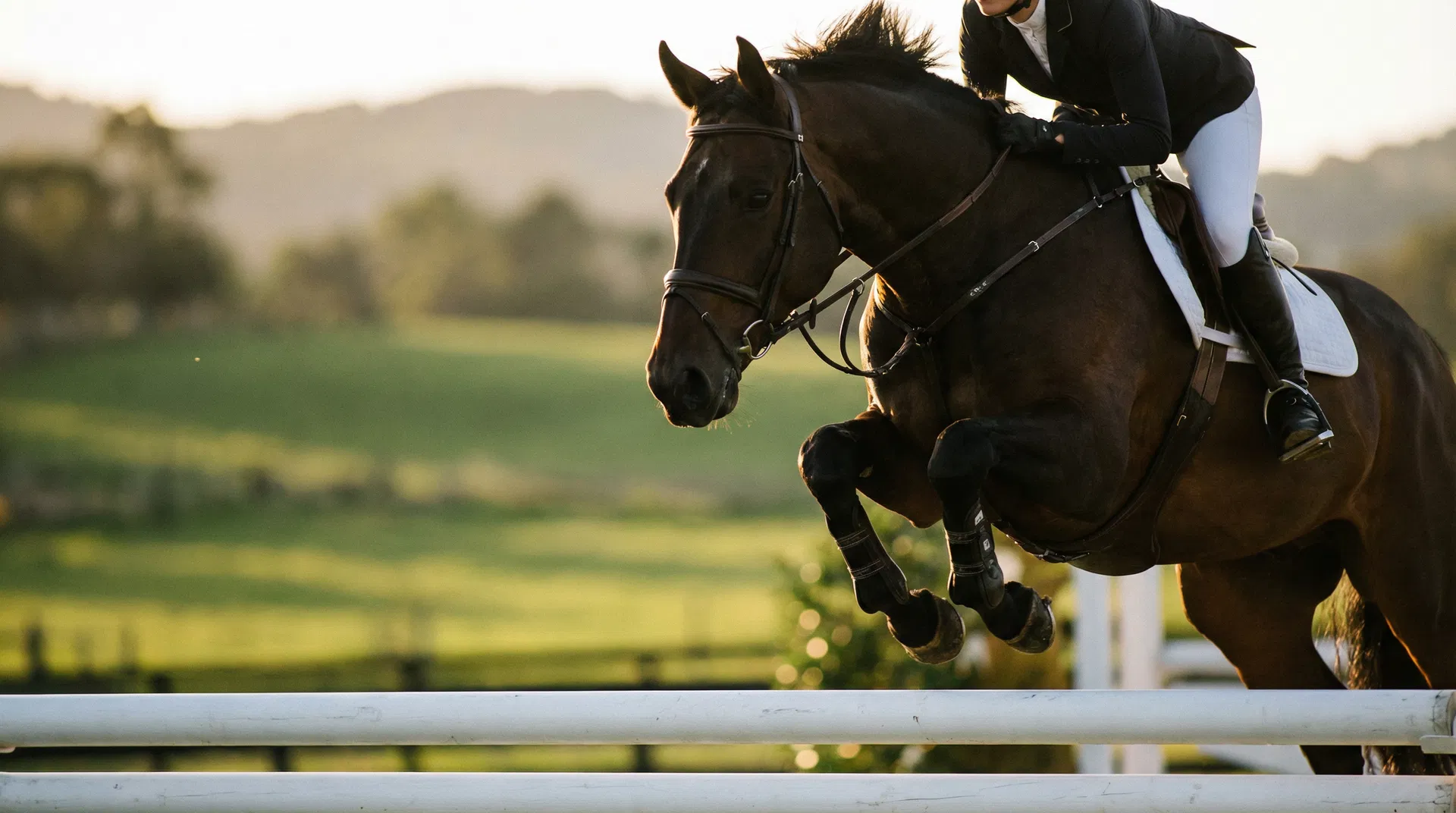
There is a reason photographers talk about golden hour with something close to reverence. In the hour after sunrise and the hour before sunset, the sun sits low on the horizon, casting a warm, directional light that flatters everything it touches — and nothing more so than a horse in motion.
The physics are simple: when the sun is low, its light travels through more of the Earth's atmosphere before reaching your subject. This filters out the harsh blue wavelengths and leaves behind the warm golds, ambers, and pinks that make equestrian images feel almost painterly.
For competition photography, this means planning your schedule around the light. We always ask our clients for the full day's schedule in advance so we can identify which classes fall in the golden windows. A show jumping round photographed at midday under flat overhead light will never have the same magic as one captured at 6am with long shadows stretching across the arena.
For portrait sessions, we build the entire session around the light. We typically schedule our equine portraits to begin 90 minutes before sunset, giving us time to warm up, settle the horse, and then hit the golden window at its peak. The results speak for themselves — coats that glow, eyes that sparkle, and a warmth to the whole image that no amount of post-processing can fully replicate.
Our advice to every client: if you have the flexibility to choose your session time, always choose golden hour. It requires an early alarm or a later dinner, but the images you'll receive will be worth every minute of it.
Ready to Book?
We'd love to work with you and your horses.