Behind the Lens
The Art of Capturing Collection: Dressage Photography Up Close
February 22, 2026
·7 min read
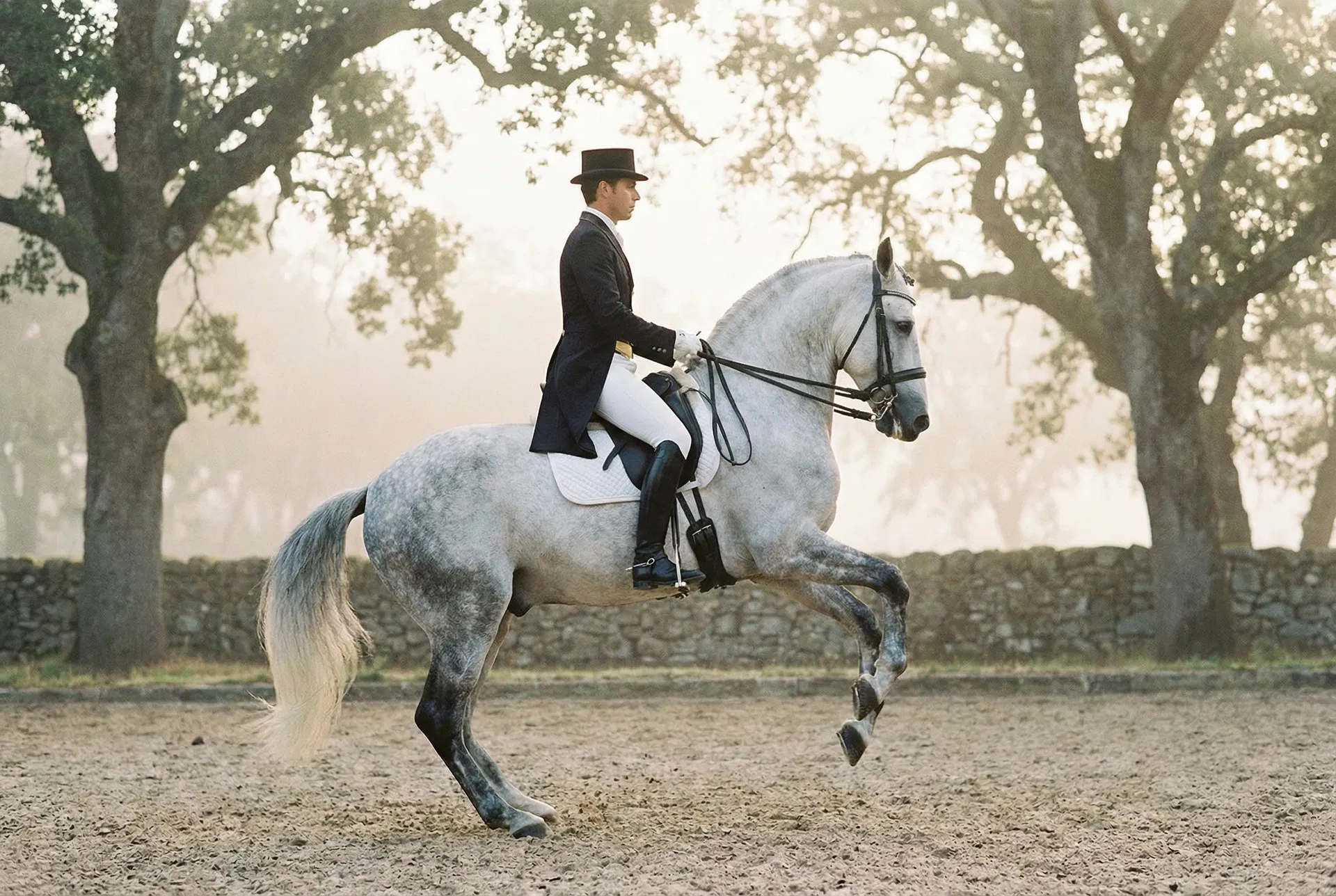
Dressage photography is a discipline in itself. Unlike show jumping, where the drama is obvious and the decisive moment is clear — horse and rider suspended above the fence — dressage asks the photographer to understand nuance. To know the difference between a good trot and a great one. To recognise collection when they see it, and to be ready when it arrives.
We position ourselves differently for dressage than for any other discipline. For jumping, we work from the side or the front, close to the fence. For dressage, we often work from the long side, at a slight angle, to capture the full silhouette of the horse — the engagement of the hindquarters, the elevation of the forehand, the lightness of the contact.
Timing is everything. In piaffe, we're looking for the moment of maximum suspension — when the diagonal pair is at its highest point and the horse appears almost to float. In passage, we want the moment when the raised foreleg is parallel to the ground and the hind leg is at its fullest engagement. These moments last a fraction of a second. Missing them means waiting for the next stride.
We shoot at high shutter speeds — typically 1/1600s or faster — to freeze motion cleanly. But we also pay attention to the background. A busy arena backdrop can ruin an otherwise perfect image. We scout our positions before the session begins, identifying the angles where the background is clean and the light is best.
The result, when everything comes together, is an image that captures not just the movement but the feeling of dressage — the harmony, the precision, the extraordinary athleticism of a horse working at the highest level of its training.
Ready to Book?
We'd love to work with you and your horses.